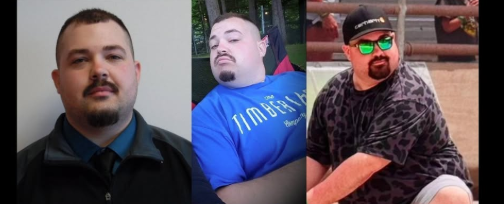
VIENNA, N.Y. – The winding stretch of State Route 13 that cuts through the rural hamlet of Vienna, in Oneida County, became the scene of a violent and heartbreaking collision on Wednesday evening, July 22, 2026, when a northbound Harley-Davidson motorcycle met a pickup truck that had turned directly into its path. The motorcyclist, Ryan A. Lyke, 37, a beloved husband, father, and mechanic from Canastota, was thrown from his bike in a catastrophic impact that left him with massive internal injuries. Despite the frantic efforts of emergency medical personnel, Lyke was pronounced dead shortly after arrival at Rome Health hospital. The driver of the pickup truck—identified as Leo G. Seaton, 90, of Camden—was evaluated by a Drug Recognition Expert and showed no signs of impairment, according to the New York State Police. No charges have been filed, and the investigation into the exact cause of the crash remains active.
The crash occurred at approximately 5:05 p.m. on Wednesday, July 22, along State Route 13 in the Town of Vienna—a predominantly rural area known for its rolling hills, farmland, and occasional sharp curves. According to the preliminary investigation by the New York State Police, Lyke was operating his 2022 Harley-Davidson motorcycle northbound on Route 13, while Seaton was driving his 2020 Nissan Frontier southbound. Seaton, who was traveling in the opposite direction, initiated a left turn across the highway—likely to enter a side road, driveway, or private property. In doing so, he turned directly into the path of the oncoming motorcycle, leaving Lyke with no time to brake or swerve.
The collision was described by investigators as “violent” and “unavoidable.” The front of the Harley-Davidson struck the driver’s side of the Nissan Frontier at a nearly perpendicular angle, causing the motorcycle to crumple and Lyke to be thrown from the saddle. He landed on the asphalt pavement, suffering severe blunt-force trauma to his chest, abdomen, and head. Witnesses who were following behind the motorcycle told troopers that they saw the pickup truck begin its turn just as the motorcycle crested a slight rise in the road, making it impossible for the rider to see the truck’s intention in time.
Emergency responders—including members of the Vienna Volunteer Fire Department, the Oneida County Sheriff’s Office, and the New York State Police—arrived on the scene within minutes. They found Lyke unconscious and pulseless, with a faint heartbeat. Paramedics initiated advanced life-support protocols, including chest compressions, airway management, and intravenous fluids, while stabilizing his neck and spine. He was loaded into an ambulance and transported to Rome Health, the nearest Level II trauma center, approximately 15 miles away. Despite continued resuscitation efforts in the emergency department, Lyke was pronounced dead at 6:12 p.m. The official cause of death, pending the Oneida County Medical Examiner’s autopsy, is listed as multiple blunt-force injuries.
The Victim: Ryan A. Lyke, a Mechanic, a Father, and a Passionate Rider
Ryan Lyke was not simply a statistic in a crash report. He was a 37-year-old man who had built a life around his family, his work, and his love of motorcycles. Born and raised in Canastota, a small village in Madison County, Ryan was the youngest of three children. He graduated from Canastota High School in 2007 and immediately enrolled in a two-year automotive technology program at Mohawk Valley Community College. After completing his degree, he worked for a local dealership in Oneida before opening his own garage, “Lyke’s Auto & Cycle Repair,” in 2015. His shop specialized in motorcycle maintenance, and he quickly gained a reputation as the go-to mechanic for Harley-Davidson owners across the region.
His wife, Megan Lyke, described him as “the kind of man who could fix anything.” “He would spend hours under a car or inside an engine, and he loved every second of it,” she said. “But his true passion was his Harley. He bought that bike in 2022 as a 40th birthday present to himself, but he couldn’t wait—so he got it early. He rode it everywhere—to work, to the grocery store, to visit his parents. It was his escape.”
The couple had been married for 14 years and had two children—a daughter, Emma, 11, and a son, Ethan, 8. Ryan was a doting father who coached Ethan’s little league baseball team and never missed Emma’s dance recitals. He was also a member of the Canastota Moose Lodge, where he helped organize charity rides for local veterans. “He had a heart as big as his motorcycle engine,” said his brother, Josh Lyke. “He would give you the shirt off his back, and then he’d ask if you needed a ride somewhere.”
On the day of the crash, Ryan had finished work early and decided to take a sunset ride along State Route 13—a route he had traveled hundreds of times. He had texted Megan at 4:30 p.m. to say he would be home by 6:00 p.m. for dinner. He never made it.
The Other Driver: Leo G. Seaton, 90, a Local Farmer with No Prior Incidents
The other driver in this tragedy was Leo G. Seaton, a 90-year-old resident of Camden, a small town about 8 miles west of Vienna. Seaton is a retired dairy farmer who has lived in Oneida County his entire life. According to his family, he still drives daily—mostly short trips to the local feed store, the post office, and his granddaughter’s house. He has a clean driving record, with no prior accidents or moving violations on file with the New York State Department of Motor Vehicles.
The New York State Police deployed a Drug Recognition Expert (DRE) to evaluate Seaton at the scene. The DRE is a specially trained officer who assesses whether a driver is impaired by drugs or alcohol through a standardized series of physical and cognitive tests. The officer determined that Seaton showed no signs of impairment—no slurred speech, no bloodshot eyes, no balance issues, and no erratic behavior. A field sobriety test was not performed, as the DRE evaluation is the standard protocol for older drivers in fatal crashes. Additionally, a breathalyzer test was administered at the scene, which returned a reading of 0.00% blood-alcohol concentration.
Seaton was not injured in the crash, though his pickup truck sustained significant front-end damage. He was interviewed by troopers at the scene and provided a statement. According to sources close to the investigation, Seaton told officers that he had activated his left turn signal and had checked for oncoming traffic, but he did not see the motorcycle because it was “coming over a hill” and “the sun was in my eyes.” The sun, which was setting in the west, would have been shining directly into Seaton’s eyes as he looked northbound—a possible contributing factor.
Troopers have not cited Seaton for any violations, and no charges have been filed. The investigation is ongoing, and the Oneida County District Attorney’s Office will review the evidence to determine whether any charges—such as failure to yield the right-of-way or vehicular assault—are appropriate. However, given Seaton’s age, clean record, and lack of impairment, it is likely that the case will be classified as a tragic accident rather than a criminal matter.
The Crash: A Forensic Reconstruction of What Happened
The New York State Police Collision Reconstruction Unit arrived at the scene shortly after the crash and began a meticulous documentation process. Using total station surveying equipment, drones, and 3D laser scanners, they created a detailed map of the crash site, including the point of impact, the final resting positions of both vehicles, and the debris trail.
According to the preliminary reconstruction, the following sequence of events occurred:
-
Approach: Lyke was traveling northbound on State Route 13 at a speed estimated at 50 to 55 mph—the posted speed limit for that section. Seaton was traveling southbound at approximately 35 to 40 mph, slowing down as he prepared to turn left into a private driveway that leads to a farm owned by his nephew.
-
The Turn: Seaton activated his left turn signal approximately 200 feet before the driveway. He slowed and began his turn, crossing the southbound lane and entering the northbound lane. At that moment, Lyke was cresting a slight rise in the road—approximately 150 feet away. The rise, combined with the angle of the sun, obscured Lyke’s view of the turning truck.
-
The Collision: Lyke had approximately 1.5 seconds to react once the truck became visible. He applied the front and rear brakes, leaving skid marks measuring 12 feet on the asphalt. However, the distance was insufficient. The front tire of the Harley-Davidson struck the driver’s side door of the Nissan Frontier at a speed of approximately 40 mph. The motorcycle was deflected sideways, and Lyke was launched over the handlebars.
-
Secondary Impacts: Lyke struck the pavement head-first, then rolled several feet before coming to rest on the shoulder. His helmet—which he was wearing—shattered on impact, but the force of the blunt trauma to his chest and abdomen was the primary cause of death. The motorcycle slid another 30 feet, leaving a gouge in the asphalt, before coming to a stop on its side.
The reconstruction team also analyzed the vehicles’ event data recorders (EDRs). The Harley-Davidson does not have an EDR, but the Nissan Frontier’s airbag control module recorded a pre-crash speed of 38 mph, a brake application, and a steering input—all consistent with Seaton’s account that he was turning slowly.
Witness Accounts: A “Horrifying” Scene
Several motorists witnessed the crash and provided statements to the State Police. One witness, Thomas B. Miller, 54, a truck driver from Utica, was following Lyke’s motorcycle and saw the entire event unfold. In an interview with The Oneida Daily Dispatch, Miller described the scene as “horrifying.”
“I saw the motorcycle coming over that hill, and I saw the pickup truck start to turn. I thought, ‘Oh no, he’s not going to see him.’ I tried to honk my horn, but it was too late. The motorcycle hit the truck with this terrible crash sound—metal and plastic and rubber all tearing apart. The rider flew up in the air and came down hard. I pulled over and ran over to help, but he was out cold. There was blood everywhere.”
Another witness, Clara Whitfield, 72, who lives in a house across the street from the crash site, said she heard the impact from her living room. “I heard a loud bang, and then I saw the motorcycle sliding across the road. I called 911 right away. It was the worst thing I’ve ever seen.”
The New York State Police are asking anyone else who may have witnessed the crash or who may have dashcam footage from that time and location to contact the Troop D headquarters at (315) 366-6000.
The Aftermath: A Community in Shock and a Family in Mourning
The news of Ryan Lyke’s death spread rapidly through Canastota and the surrounding communities. On Thursday morning, the flags at the Canastota Village Hall and the local fire station were lowered to half-staff. A makeshift memorial—consisting of flowers, a photograph of Ryan on his motorcycle, and his riding gloves—has been erected at the site of the crash on State Route 13.
Megan Lyke, Ryan’s wife, released a statement on Thursday afternoon, thanking the community for their support and asking for privacy. “Ryan was my best friend and the love of my life,” she said. “He was the father of our two beautiful children, and he was the best dad I could have ever asked for. He loved his Harley, he loved his family, and he loved life. I don’t know how we’re going to get through this without him, but I know that he would want us to keep going, to stay strong, and to remember the good times.”
The Lyke family has announced that a memorial service will be held on Monday, July 27, at the Canastota Methodist Church, with burial at the Canastota Village Cemetery. In lieu of flowers, the family has asked that donations be made to the Motorcycle Safety Foundation, an organization dedicated to rider training and awareness.
The Broader Issue: Left-Turn Crashes and Motorcycle Vulnerability
This crash is a textbook example of a common and deadly scenario: a left-turning vehicle failing to yield to oncoming traffic. According to the National Highway Traffic Safety Administration (NHTSA), left-turn crashes account for approximately 20% of all fatal motorcycle accidents nationwide. The primary cause is usually the driver’s failure to see the motorcycle—often due to the motorcycle’s smaller size, the driver’s poor scanning habits, or the angle of the sun.
In this case, the combination of a hill, the setting sun, and the age of the driver may have contributed to Seaton’s inability to see Lyke. While Seaton was not impaired, his reaction time and visual acuity may have been diminished—a factor that is not unlawful but is a reality of aging. The New York State DMV does not require drivers over the age of 80 to take additional road tests, though some states do.
Motorcycle safety advocates are using this tragedy to remind both motorists and riders of the importance of defensive riding. “Motorcyclists should always assume they are invisible to other drivers,” said Brian J. O’Connor, the president of the New York Motorcycle Safety Alliance. “Ride with your headlight on, wear bright colors, and avoid riding in blind spots. And for car and truck drivers: look twice for motorcycles, especially when turning left. It could save a life.”
The Legal and Insurance Ramifications
As of this writing, no charges have been filed against Leo Seaton. The New York State Police will complete their investigation and submit a report to the Oneida County District Attorney’s Office, which will decide whether to pursue any charges. The most likely charge, if any, would be “failure to yield the right-of-way” (Vehicle and Traffic Law § 1141), which is a traffic infraction punishable by a fine and points on the driver’s license. However, because the crash resulted in a fatality, the DA could also consider “criminally negligent homicide” (Penal Law § 125.10) if there is evidence of gross negligence. Given Seaton’s age, clean record, and the lack of impairment, criminal charges are unlikely.
On the civil side, Megan Lyke is expected to file a wrongful death lawsuit against Seaton and his insurance company. The lawsuit would seek damages for medical expenses, funeral costs, loss of consortium, and the loss of Ryan’s future income. Seaton’s auto insurance policy—which likely has a minimum liability limit of $25,000 per person in New York—may not be sufficient to cover the full damages, and Lyke’s estate may seek to recover from Seaton’s personal assets. However, such legal proceedings are months away.
Conclusion
The death of Ryan A. Lyke is a tragedy that has left a wife widowed, two children fatherless, and a community mourning. He was a man who lived his life with passion—a skilled mechanic, a devoted husband, a loving father, and an avid motorcyclist. And he died because a 90-year-old farmer made a left turn at the wrong moment, turning directly into the path of the oncoming motorcycle. It was a split-second mistake with a lifetime of consequences.
The New York State Police will continue their investigation, and the DA will review the evidence. But for Megan, Emma, and Ethan Lyke, the legal proceedings and the crash reconstruction are secondary to their grief. They are left with memories of Ryan’s laugh, his work ethic, and his love for the open road. They are left with a Harley-Davidson that will never be ridden again, and a dinner table that will always have an empty chair.
As the sun sets over Vienna, the memorial on State Route 13 grows larger, adorned with flowers and handwritten notes. One note, written by a fellow rider, reads: “Ryan, you rode hard and you loved harder. Rest in peace, brother. We’ll keep the throttle open for you.”
The investigation continues, and the community holds its breath for answers. But the ultimate answer is clear: a man is gone, a family is broken, and a road will never be the same.
Ryan A. Lyke, 37, Canastota, New York. He was a husband, a father, a mechanic, and a rider. He lived his life in the fast lane, but he was always in control—until that one moment, that one turn, that one collision. Rest in peace, Ryan. The road will miss you.

Leave a Reply